The Alkebulan Bridge Project Mentorship Program aims to facilitate meaningful connections between youth participants and university students or graduates from five prominent institutions: the University of Cape Coast, University of Ghana, Kwame Nkrumah University of Science and Technology (KNUST), Lagos State University, and University of Lagos. This program will provide guidance, support, and inspiration for participants as they explore their cultural heritage and academic aspirations.
Program Objectives:
To foster cross-cultural exchange and understanding between participants and mentors.
To provide participants with academic guidance and career advice from experienced mentors.
To inspire participants through role models who have successfully navigated their educational and career paths.
To promote personal and professional development among youth of African descent.
Mentorship Structure:
Mentor Selection:
Mentors will be selected from enrolled students or recent graduates from the participating universities, focusing on those who excel in their academics and demonstrate a commitment to community service.
A recruiting campaign will ensure that mentors possess diverse backgrounds and areas of expertise to cater to varied participant interests.
Participant Enrollment:
Participants of the Alkebulan Bridge Project will express interest in joining the mentorship program during registration.
Participants will complete a brief survey indicating their academic interests, career goals, and preferences for mentorship.
Matchmaking Process:
Each participant will be matched with a mentor based on shared interests, fields of study, and career aspirations.
To ensure compatibility, initial surveys and interviews will be conducted.
Program Components:
Orientation Sessions:
Both mentors and participants will attend orientation sessions, providing an overview of program expectations, communication guidelines, and timelines.
Training for mentors will include effective mentorship strategies, cultural sensitivity training, and the importance of fostering open communication.
Regular Meetings:
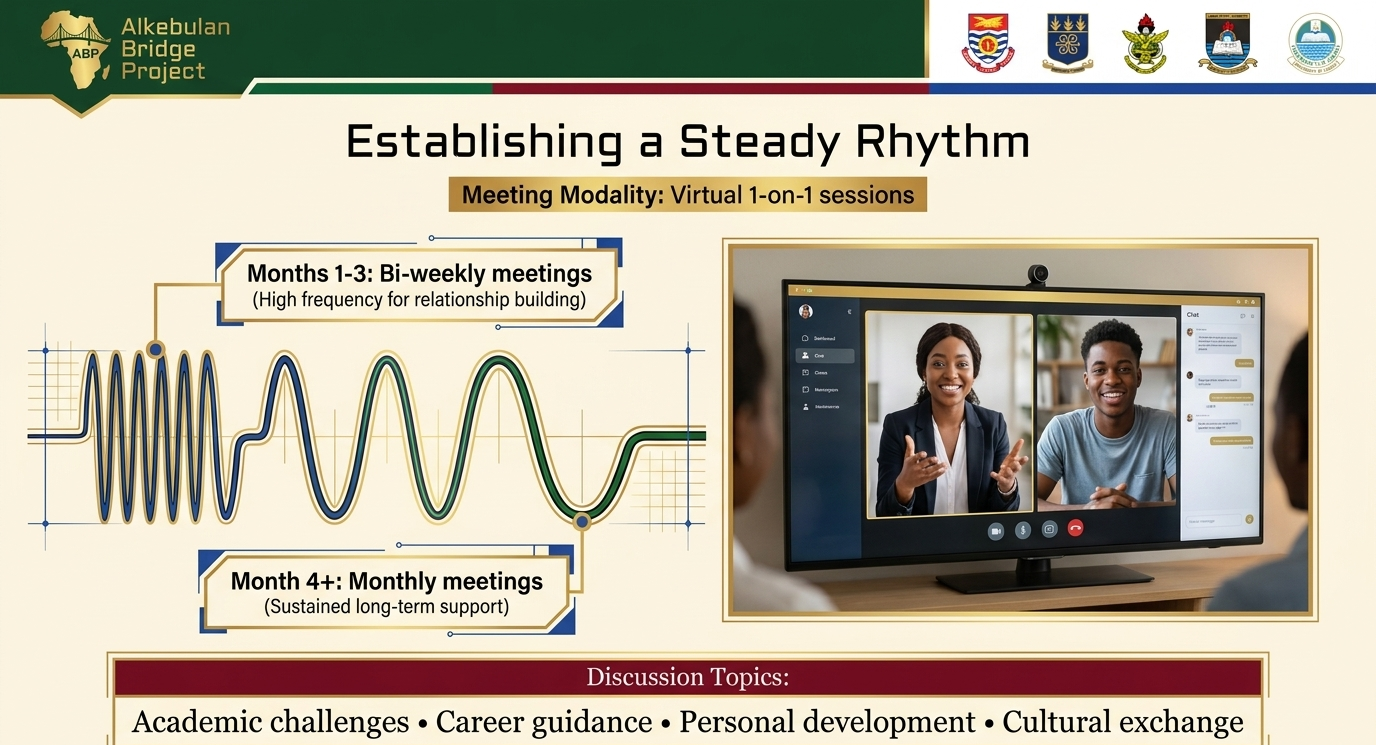
Mentorship pairs will schedule regular meetings (virtual) to discuss topics such as academic challenges, career guidance, personal development, and cultural exchange.
Recommended frequency: bi-weekly meetings for the first three months, transitioning to monthly meetings thereafter.
Workshops and Seminars:
Organize workshops covering relevant topics like academic writing, resume building, and career planning.
Invite guest speakers from various industries to share their professional experiences and insights.
Cultural Exchange Activities:
Incorporate activities that promote cultural understanding, such as sharing traditional practices, discussing local customs, or exploring historical sites relevant to both participants’ and mentors’ backgrounds.
Group Mentorship Events:
Host periodic meet-ups or conferences that allow all participants and mentors to connect, share experiences, and collaborate on projects or discussions, fostering a broader community.
Feedback and Evaluation:
Implement a system for participants and mentors to provide feedback on their experiences, allowing for continuous improvement of the mentorship program.
An annual evaluation will assess the program’s impact, identify areas for growth, and celebrate successes.
Outcomes and Impact:
Enhance participants’ academic performance and career readiness through guidance tailored to their goals.
Develop lasting relationships between participants and mentors, creating a network of support and knowledge-sharing.
Encourage participants to embrace their heritage and understand their role as future leaders in their communities.
Getting Involved:
To learn more about participating in the mentorship program or to become a mentor, please contact us at 586.251.6808 or visit our website www.Alkebulanbridge.org This mentorship program aims to provide participants with the support and inspiration needed to succeed both academically and personally, while fostering connections across cultures and generations within the African diaspora.